Jamie's Bolognese (Lasagna-Ready)
This recipe came from my friend Jamie, who learned it from a head chef at Alberto's in Sydney. It connects two chapters of my life: learning to cook at boarding school when Dad insisted I master five dishes, and now cooking for my own family. It's a meat-forward ragù built on a long, slow cook—perfect for lasagna or spaghetti.
The Recipe
This recipe came to me from my friend Jamie, who learned it from a friend who was the head chef at Alberto’s in Sydney. It also has a deep personal connection—when I left home at 12 to go to boarding school, Dad told me that I needed to be able to cook five dishes. Spaghetti bolognese was one of them.
This isn’t a typical Australian “spag bol.” It’s closer in spirit to a traditional ragù: meat-forward, relatively light on tomato, and built around a long, slow cook. The anchovies, milk, Worcestershire sauce and optional soy sauce provide depth and umami without overwhelming the dish with tomato.
I often cook it down further than most people would, creating a rich meat paste that’s perfect for layering into lasagna. If you prefer a chunkier sauce for pasta, simply stop cooking earlier.
Family Memory
For a while, this was one of Penny’s favourite meals.
Like most toddlers, she went through a period where she would happily eat almost anything that was put in front of her. A bowl of spaghetti bolognese would disappear without much encouragement, and it became one of the dependable meals we knew she would enjoy.
Unfortunately, tastes evolve. As she got older, her food preferences narrowed considerably and her personal food pyramid became increasingly weighted toward chicken nuggets and other familiar favourites. The days when a rich, slow-cooked ragù was guaranteed success at the dinner table gradually came to an end.
I’m optimistic it’s only temporary. Food preferences seem to move in cycles, and I’m hoping that at some point in the future the winds will change and spaghetti bolognese will once again find its way into her regular rotation.
Until then, this recipe remains a reminder of that brief but wonderful period when a bowl of pasta could make everyone at the table happy. Perhaps one day Penny will read this and laugh at the idea that there was a time when spaghetti bolognese sat near the top of her list of favourite foods. For now, it’s simply a small snapshot of family life, preserved alongside the recipe itself.
Ingredients
Soffritto
- 1 onion, finely diced
- 1 carrot, finely diced
- 1 celery stalk, finely diced
Meat & Seasoning
- 500g lean beef mince
- 3–4 anchovy fillets (plus a little anchovy oil)
- 3 cloves garlic, finely chopped
- 1 tbsp dried oregano (or Italian herb mix)
- Worcestershire sauce, a generous splash
- 1 tsp Kikkoman soy sauce (optional)
- Salt and pepper, to taste
Liquids
- 1 cup dry white wine
- 400ml full-cream milk
- 1 beef bouillon cube
- Water, as required during cooking
Tomato
- 2 tbsp tomato sauce (Heinz-style)
- 1 x 400g tin quality tomatoes (preferably Mutti)
Optional
- Small knob of butter
- Splash of red wine during cooking
Method
- 1
Heat a generous splash of olive oil in a large heavy-based pan.
- 2
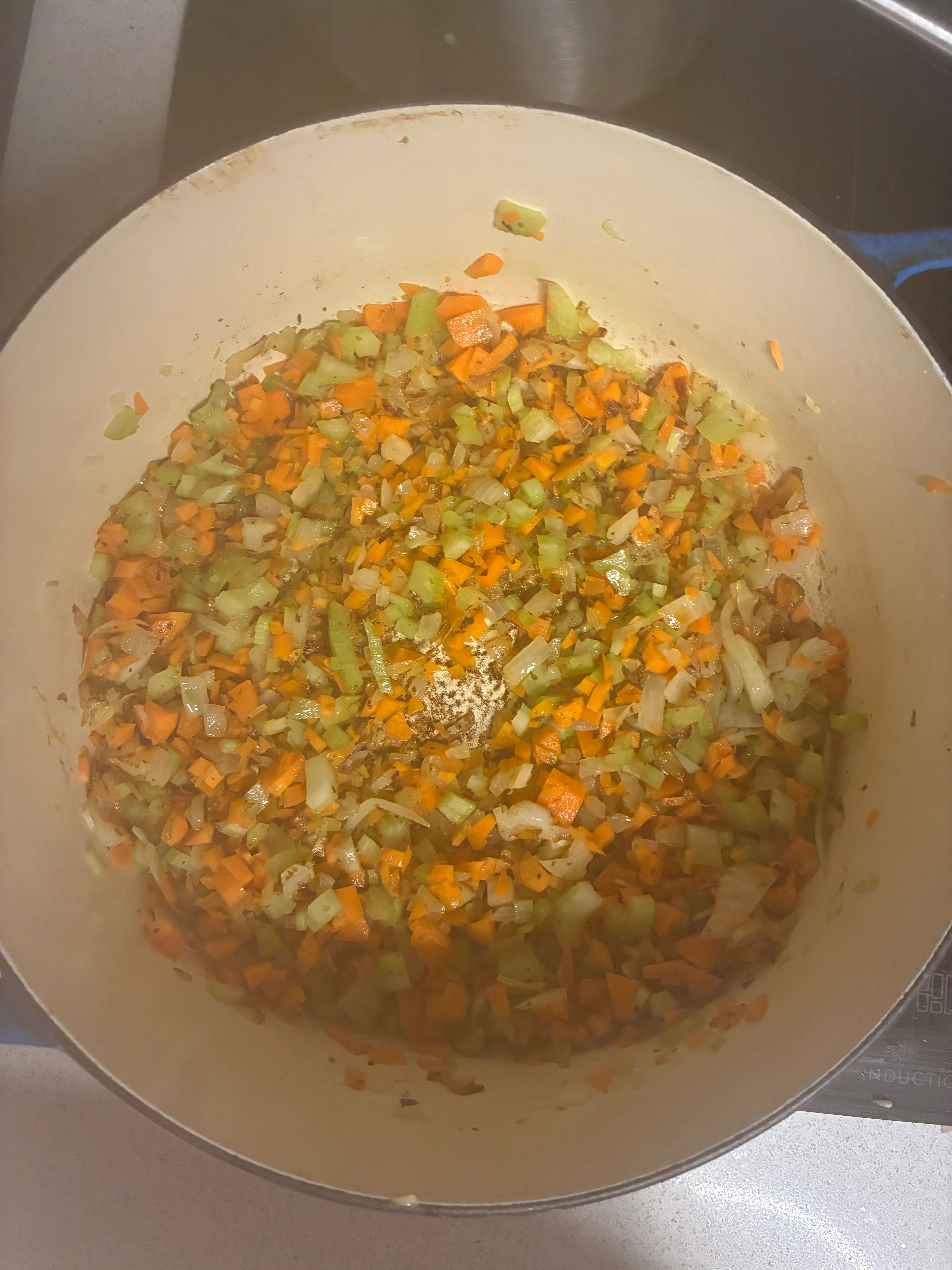
Add the onion and cook slowly until softened and beginning to brown. The sweetness and depth developed here becomes the foundation of the sauce.
- 3
Add the oregano and stir through.
- 4
Add the carrot and celery and continue cooking until softened and beginning to caramelise.
- 5
Stir through the anchovies, Worcestershire sauce, and tomato sauce. Cook until the anchovies dissolve and everything comes together into a rich, aromatic base.
- 6
Add the garlic and cook for another minute.
- 7
Add the beef mince and cook over medium-high heat, breaking it apart as it cooks. The goal is to brown the meat rather than boil it. Let the meat develop colour and flavour.
- 8
Pour in the white wine and scrape the bottom of the pan thoroughly to lift all the caramelised bits into the sauce. Allow to simmer for several minutes until slightly reduced.
- 9
Pour in the milk. Add the beef bouillon cube and soy sauce (if using). Stir well. Add a small amount of the canned tomatoes—the sauce should remain meat-forward rather than heavily tomato-based.
- 10
Transfer to a casserole dish or continue cooking in a heavy pot. Ensure there is enough liquid to comfortably cover the meat.
- 11
Cook slowly for a minimum of 2 hours (ideal: 3 hours). If cooking in the oven, cover loosely and check periodically, adding water, white wine or stock if it becomes too dry. If on the stovetop, stir regularly to prevent sticking.
- 12
Continue cooking until the texture suits your intended use. For spaghetti bolognese, leave it slightly chunky with visible pieces of meat and vegetables. For lasagna, cook longer until it reaches a rich, concentrated, almost spreadable meat-paste consistency.
- 13
Taste and adjust seasoning before serving.
Notes
**Brown the onions properly:** Don't rush the onions. Under-cooked onions lead to a flat sauce; browning develops sweetness, depth and complexity that carry through the entire dish. **White wine is the right wine:** Red wine can dominate the flavour profile. White wine lifts the caramelised flavours from the pan while keeping the sauce lighter and more balanced. **A casserole dish makes life easier:** With young kids in the house, standing over a pot for three hours isn't always practical. A casserole delivers excellent results with far less attention. **Bouillon cubes are perfectly fine:** A beef stock cube adds an easy layer of savoury depth. Homemade stock is wonderful if you have it, but it's not essential. **The goal is breakdown, not chunks:** This sauce should become progressively smoother as it cooks. Rather than distinct pieces, aim for a rich, cohesive meat paste where everything has largely broken down into one another. **Less tomato than most people think:** A good bolognese is not a tomato sauce with meat added. The tomatoes should support the meat rather than dominate it. Most of the flavour comes from the soffritto, anchovies, Worcestershire sauce, wine, milk and the long cooking process.